Can an Automatic Checkweigher Work with a Metal Detector?
Yes, an automatic checkweigher can work with a metal detector, and in many production environments this combination is a highly practical solution. Manufacturers often need to verify product weight and inspect for metal contamination on the same packaging line. Instead of using two completely separate processes, many companies prefer an integrated inspection system that combines both functions.
This type of combined setup can improve production efficiency, save space, and simplify quality control. In this article, we explain how an automatic checkweigher works with a metal detector, why this combination is useful, and what manufacturers should consider before choosing this type of solution.
1. Why Combine Weight Inspection and Metal Detection?
On many packaging lines, both weight verification and contaminant detection are essential. A checkweigher helps ensure that each package is within the acceptable weight range, while a metal detector helps identify unwanted metal contamination in the product or package.
When these functions are combined, manufacturers can perform two key inspection steps in a more efficient way:
- Verify package weight
- Detect metal contamination
- Reduce manual inspection effort
- Support better inline quality control
This is especially useful in industries where product quality, packaging consistency, and inspection reliability are important.
2. How Does the Integrated System Work?
In a combined setup, the packaged product moves through the inspection line and passes through both the metal detection section and the checkweighing section. Depending on the design, these functions may be integrated into one machine structure or connected as part of a unified conveyor line.
The system can then determine whether the product:
- Passes the weight requirement
- Fails the weight requirement
- Passes metal detection
- Fails metal detection
If the product fails either inspection, it can be automatically removed by the reject mechanism.
3. Benefits of Combining a Checkweigher with a Metal Detector
One of the biggest benefits of a combined system is efficiency. Instead of installing and managing two fully separate inspection stations, manufacturers can streamline the process into one integrated solution.
Main advantages include:
- Better use of floor space
- Simplified line layout
- Improved production flow
- Reduced handling between inspection points
- More unified quality control process
For production lines with limited space or a strong need for automation, this can be a major advantage.
4. Better Line Efficiency
Using a separate metal detector and checkweigher may create more transfer points, longer conveyors, and more line complexity. A combined system reduces these issues and can help improve packaging line efficiency.
By integrating both inspection functions into one workflow, manufacturers can:
- Reduce equipment footprint
- Improve product flow consistency
- Lower system complexity
- Reduce installation and coordination challenges
This makes the line easier to manage and often improves overall production efficiency.
5. Stronger Quality Control on Packaging Lines
A metal detector checks product safety from a contamination perspective, while a checkweigher checks product conformity from a weight perspective. When both systems work together, manufacturers gain stronger control over the final packaged product.
This is valuable because it helps verify that the package is:
- Within the target weight range
- Free from detectable metal contamination
- Suitable for release to the next production stage
In quality-focused production environments, this combined control approach is highly practical.
6. Useful in Food Production
One of the most common applications for an automatic checkweigher with metal detector is the food industry. Food manufacturers often need to reduce product giveaway, maintain packaging consistency, and inspect for contamination risks on the same line.
Typical food packaging applications include:
- Pouches and sachets
- Trays and thermoformed packs
- Cartons and boxed food products
- Frozen and chilled packaged items
If you work in this sector, you can also review our food application page for more details.
7. Suitable for Other Industries Too
Although food is a major application, integrated systems can also be useful in other packaged product environments where both inspection steps matter. Depending on the product type, the system may be used in:
- Pharmaceutical packaging
- Consumer goods production
- Retail packaged products
- Industrial packaged items
The exact suitability depends on the product, packaging material, production speed, and inspection requirements.
8. What Should Be Considered Before Choosing One?
Before selecting a combined inspection system, manufacturers should evaluate several practical factors. Not every line has the same needs, and the best configuration depends on the real production environment.
Important considerations include:
- Product size and packaging format
- Required weighing accuracy
- Line speed and throughput
- Available installation space
- Reject method
- Environmental conditions
- Integration with existing packaging equipment
For faster lines, a high-speed checkweigher section may be especially important to keep the combined system performing well.
9. Reject Handling Is Important
When a product fails either metal detection or weight inspection, the reject system must remove it correctly without affecting the flow of accepted products. In an integrated system, reject handling needs to be designed carefully so that failed products are separated reliably.
Common reject methods may include:
- Air blast reject
- Pusher reject
- Drop reject
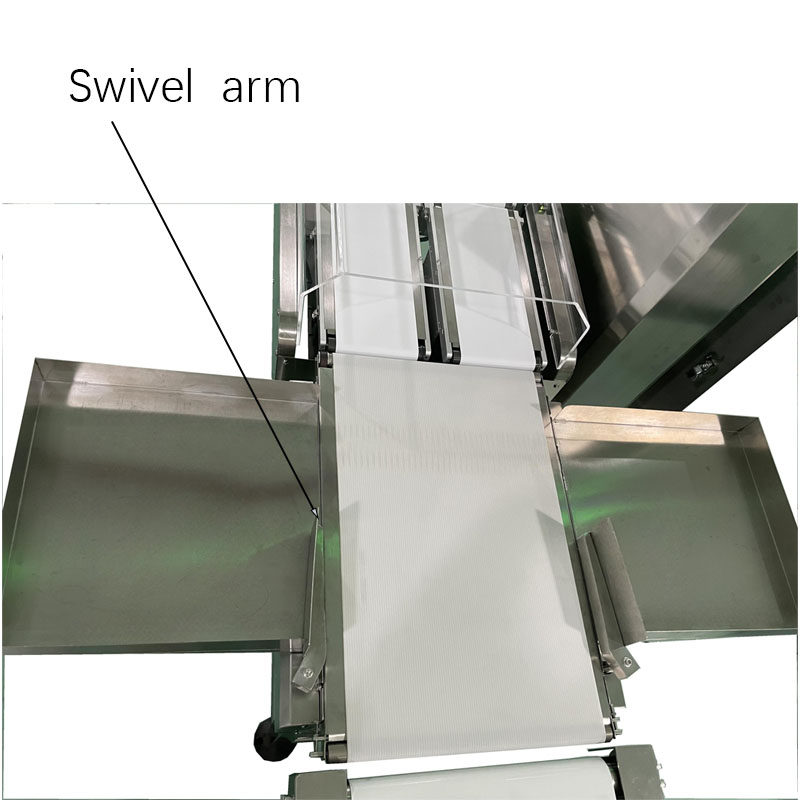
- Swing arm reject
The correct choice depends on product stability, package type, and line speed.
10. Customization May Be Needed
Some packaging lines need a standard combined solution, while others require custom conveyor length, special reject logic, compact installation, or unique communication settings. If your layout or product handling requirement is non-standard, customization may be necessary.
In these cases, an OEM custom checkweigher solution can provide a better fit for your inspection needs.
11. Is It Better Than Two Separate Machines?
That depends on the application. Two separate machines may still be suitable in some large or highly specialized lines. However, for many manufacturers, an integrated automatic checkweigher with metal detector offers a better balance of efficiency, compact design, and simplified inspection control.
If your goal is to save space and create a more streamlined inspection process, the combined system is often the better option.
Conclusion
An automatic checkweigher can absolutely work with a metal detector, and for many production lines this combination is an efficient and practical solution. It allows manufacturers to verify package weight and detect metal contamination within one inspection workflow, improving quality control while supporting better line efficiency.
The best solution depends on your product type, line speed, layout, and inspection requirements. If you are evaluating this type of system, it is important to choose a configuration that matches your real production conditions.
To learn more, visit our automatic checkweigher with metal detector page, review our checkweigher models and specifications, or contact us for technical recommendations.
Frequently Asked Questions
Can an automatic checkweigher and metal detector be used together?
Yes. Many production lines use integrated systems that combine automatic checkweighing and metal detection in one streamlined inspection solution.
Why do manufacturers combine these two functions?
They combine them to improve line efficiency, save space, and strengthen product inspection by checking both weight conformity and metal contamination.
Is a combined system suitable for food packaging?
Yes. Food packaging is one of the most common applications for integrated automatic checkweigher and metal detector systems.
Do combined systems need custom design?
Sometimes. Standard models work for some lines, but special products, layouts, or reject requirements may need a customized configuration.