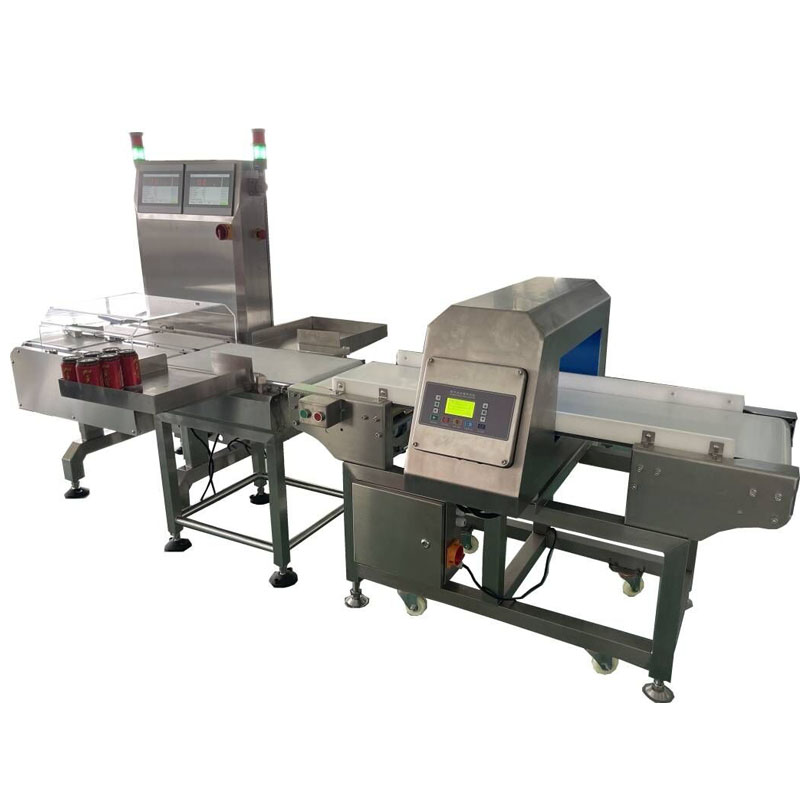
What Is the Difference Between a Checkweigher and a Conveyor Scale?
Manufacturers looking for inline weighing equipment often come across two similar terms: conveyor scale and automatic checkweigher. Although both systems involve weighing products on a conveyor, they are not the same in function, application, or level of automation.
Choosing the wrong system can affect efficiency, inspection performance, and long-term production value. In this article, we explain the main differences between a checkweigher and a conveyor scale so you can better understand which solution is right for your production line.
1. Basic Purpose of Each System
A conveyor scale is generally used to measure the weight of products or materials while they move through a conveyor system. Its main purpose is weight measurement, process monitoring, or throughput calculation.
An automatic checkweigher, by contrast, is designed specifically for inline weight inspection. It checks whether each packaged product falls within a preset acceptable weight range and can automatically reject products that are underweight or overweight.
In simple terms:
- A conveyor scale measures weight
- A checkweigher measures weight and makes pass/fail decisions
2. Function in the Production Line
The role of each machine in production is different. Conveyor scales are often used where the goal is to obtain weight data for process control, batching, or material flow monitoring.
Checkweighers are used where the goal is to verify individual packaged products during production and separate non-conforming items automatically.
This means that a checkweigher is more quality-control focused, while a conveyor scale is often more process-measurement focused.
3. Weight Tolerance Decision Capability
One of the most important differences is tolerance checking. A conveyor scale can display or transmit weight values, but it does not always include the logic needed to classify products based on a preset weight range.
An automatic checkweigher is specifically designed for this purpose. It compares each product’s weight to defined limits and identifies whether the product is:
- Underweight
- Acceptable
- Overweight
This makes the checkweigher much more suitable for packaging lines where individual product compliance is critical.
4. Automatic Reject Function
Most conveyor scales do not include an automatic reject mechanism as a standard function. Their main role is measurement rather than inspection and removal.
An automatic checkweigher is typically connected to a reject device, such as:
- Air blast reject
- Pusher reject
- Drop reject
- Swing arm reject
This allows the system to remove non-conforming products without stopping the production line, which is essential for automated packaging operations.
5. Application Focus
Conveyor scales are often used in broader industrial weighing tasks, including bulk material handling, process weighing, and continuous throughput monitoring.
Checkweighers are commonly used in industries that require product-by-product inspection, such as:
- Food packaging
- Pharmaceutical packaging
- Consumer goods production
- Logistics and parcel handling
If your goal is to verify each packaged product on the line, a checkweigher is usually the better choice.
6. Accuracy and Product Handling
Both systems can be precise, but the required type of precision is different. Conveyor scales may focus on general process measurement or continuous weight monitoring. Checkweighers are designed for stable dynamic weighing of individual packages at line speed.
Because they inspect individual products, checkweighers often use optimized conveyor design and control logic to improve repeatability and handling performance.
This is especially important for lightweight, unstable, or high-speed packaged products.
7. Speed and Automation Requirements
Modern packaging lines often run at high speed and require continuous automated inspection. In these environments, a checkweigher provides more useful functionality because it can inspect every product and respond immediately when a package is out of tolerance.
For faster production lines, a high-speed checkweigher can maintain stable inspection performance while supporting higher throughput.
A conveyor scale may still be useful in automated systems, but it is not always designed for the same product-by-product inspection logic.
8. Data and Quality Control Use
Checkweighers are often used as part of a broader quality control process. They help manufacturers monitor package consistency, reduce giveaway, and support better production decisions.
Conveyor scales can also provide useful weight data, but they are generally not as focused on package verification and rejection control.
In quality-driven industries, the data from a checkweigher can help teams:
- Track weight trends
- Detect filling issues earlier
- Improve packaging consistency
- Support traceability and reporting
9. Which One Is Better for Packaging Lines?
If you run a packaging line and need to ensure that each product meets a target weight range, an automatic checkweigher is usually the better choice. It is designed specifically for inline inspection, tolerance comparison, and reject handling.
If your goal is broader process weighing or conveyor-based material measurement rather than product verification, a conveyor scale may be sufficient.
The best choice depends on your actual line objective:
- For weight monitoring only: conveyor scale
- For package inspection and reject control: checkweigher
10. When a Custom Solution May Be Needed
Some production lines have special layouts, product handling requirements, or integration needs. In these cases, the best solution may involve customized weighing equipment based on line conditions and production targets.
If your application requires special system design, you may benefit from an OEM custom checkweigher solution tailored to your process.
Conclusion
Although a checkweigher and a conveyor scale both weigh products on a moving conveyor, they serve different purposes. A conveyor scale is mainly used for weight measurement and process monitoring, while an automatic checkweigher is designed for product-by-product inspection with pass/fail decision logic and automatic rejection.
For manufacturers focused on packaging quality, compliance, and production control, a checkweigher is often the more suitable solution. Understanding the difference helps you choose equipment that matches your real production needs.
To learn more, explore our checkweigher models and specifications, visit our applications page, or contact us for technical advice.
Frequently Asked Questions
Is a conveyor scale the same as a checkweigher?
No. A conveyor scale mainly measures product or material weight, while a checkweigher verifies whether each product is within a preset weight range and can reject non-conforming items.
Which is better for packaging lines?
For packaging lines that require product-by-product inspection and reject control, an automatic checkweigher is usually the better option.
Can a checkweigher reject overweight or underweight products automatically?
Yes. Automatic checkweighers are designed to identify products outside the accepted tolerance and remove them using a reject mechanism.
When should I use a conveyor scale instead?
A conveyor scale is more suitable when the goal is general weight measurement, process monitoring, or material flow control rather than product compliance inspection.