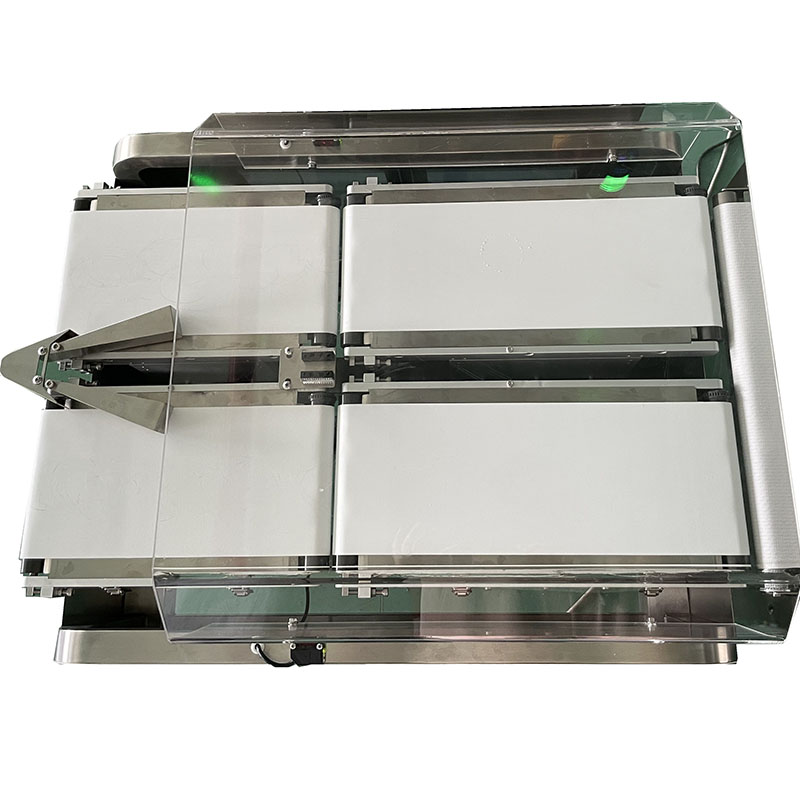
What to Consider Before Buying an Automatic Checkweigher
Buying an automatic checkweigher is an important decision for manufacturers that want better weight control, lower product giveaway, and more stable packaging quality. The right system can improve efficiency and support long-term production performance. The wrong choice can lead to unnecessary cost, weak integration, and limited future flexibility.
Before investing in a checkweigher, manufacturers should look beyond the basic machine price. Accuracy, line speed, product stability, reject system, environment, and supplier support all affect whether the final solution will actually perform well on the production line.
In this guide, we explain the main factors to consider before buying an automatic checkweigher.
1. Product Type and Packaging Format
The first thing to evaluate is the type of product that will run through the system. Package format, size, and stability all influence checkweigher performance.
You should consider:
- Product dimensions and weight range
- Rigid or flexible packaging
- Package stability on the conveyor
- Cartons, bottles, jars, pouches, trays, or bags
Unstable or lightweight packages may require special conveyor design and more precise handling. Heavier products may require a more robust structure and different weighing range.
2. Required Accuracy
Accuracy is one of the most important buying factors. Different industries and products require different tolerance levels. If the system is not accurate enough for your application, it may not reduce giveaway effectively or may fail to support your quality goals.
A good checkweigher should help you:
- Maintain stable target weight
- Reduce underweight risk
- Reduce overweight giveaway
- Improve repeatability on the line
Before buying, define your acceptable tolerance range and confirm whether the system is suitable for your actual product conditions.
3. Production Speed and Throughput
The machine must match your production speed. A checkweigher that works well on a slower line may not be able to maintain stable performance on a faster packaging system.
You should ask:
- How many products per minute need to be inspected?
- Will line speed increase in the future?
- Is the line operated continuously or in multiple shifts?
For faster packaging operations, a high-speed checkweigher may be necessary to maintain both throughput and weighing stability.
4. Production Environment
The operating environment affects machine design, durability, and long-term performance. Food, pharmaceutical, and industrial environments do not have the same requirements.
Important environmental factors include:
- Humidity and temperature
- Washdown requirement
- Dust and airflow
- Vibration from surrounding equipment
- Available installation space
In wet or hygienic environments, stainless steel construction and easy-clean design may be essential. In vibration-heavy areas, anti-interference design becomes more important.
5. Reject Method
An automatic checkweigher is not complete without a suitable reject system. The reject method must match your product type and line speed to remove non-conforming packages safely and efficiently.
Common reject options include:
- Air blast reject
- Pusher reject
- Drop reject
- Swing arm reject
If the reject system is not chosen properly, it can cause product damage, unstable rejection, or unnecessary line disruption.
6. Integration with the Production Line
A checkweigher should fit smoothly into your current production process. If line integration is weak, even a good machine may not deliver the expected result.
Before buying, review compatibility with:
- Upstream and downstream conveyors
- Filling or packaging equipment
- PLC and HMI systems
- Data collection and reporting requirements
- Other inspection equipment
Some manufacturers may also need an automatic checkweigher with metal detector to combine multiple inspection functions in one system.
7. Available Space and Line Layout
Machine size and installation layout should be reviewed before purchase. Many production lines have limited space, which affects conveyor length, reject position, and maintenance access.
You should confirm:
- Available floor space
- Infeed and outfeed height
- Operator access for maintenance and cleaning
- Electrical and mechanical connection points
If your layout is unusual or restricted, a standard model may not be the best fit.
8. Customization Requirements
Not every production line can use a fully standard machine. Some applications require custom conveyor length, special reject logic, compact layout, higher protection level, or unique communication settings.
In these situations, an OEM custom checkweigher solution may offer better long-term value than forcing a standard machine into a non-standard production line.
9. Data, Monitoring, and Traceability
Modern manufacturing increasingly depends on data visibility. Before buying, consider whether the checkweigher needs to support monitoring, quality records, or production reporting.
Useful features may include:
- Weight trend monitoring
- Production data export
- Alarm and rejection records
- Support for internal quality documentation
These functions can improve process control and support better decision-making over time.
10. Maintenance and Ease of Use
A machine that is difficult to maintain or operate can create hidden cost after installation. Ease of use is especially important in production environments where downtime must be minimized.
Before buying, review:
- Ease of cleaning
- Operator interface simplicity
- Routine maintenance requirements
- Availability of spare parts and support
A practical machine should be reliable, easy to manage, and suitable for daily production use.
11. Supplier Experience and Support
The supplier is almost as important as the machine itself. A good supplier should understand real production conditions and provide support before, during, and after installation.
You should evaluate:
- Application knowledge
- Model and specification range
- Technical consultation
- Installation and after-sales service
- Responsiveness to customization needs
Strong supplier support reduces project risk and helps ensure the selected solution actually works in production.
12. Total Cost and Long-Term ROI
Price is important, but the lowest-cost option is not always the best investment. A well-chosen checkweigher can reduce giveaway, lower manual inspection effort, improve process control, and support better long-term efficiency.
When reviewing ROI, consider:
- Potential reduction in product giveaway
- Labor savings from reduced manual inspection
- Improved packaging consistency
- Reduced rework and product handling
- Future scalability for production growth
The best purchasing decision is based on long-term performance value, not only initial equipment cost.
Conclusion
Before buying an automatic checkweigher, manufacturers should evaluate product characteristics, accuracy requirements, line speed, reject method, installation space, integration needs, and long-term supplier support. The more closely the machine matches your real production conditions, the better the result will be after installation.
A good checkweigher improves weight control, supports packaging efficiency, and helps reduce unnecessary cost across the production line. Choosing carefully at the beginning can prevent many problems later.
To find the right solution, explore our checkweigher models and specifications, review our industry applications, or contact us for technical advice.
Frequently Asked Questions
What should I check before buying an automatic checkweigher?
You should review product size, weight range, line speed, accuracy requirement, reject method, installation environment, and integration needs.
Why is line speed important when buying a checkweigher?
Because the machine must maintain stable performance at your actual production throughput. If it cannot keep up, inspection accuracy and line efficiency may suffer.
Do all production lines need a custom checkweigher?
No. Some lines can use standard models, but applications with unusual layout, special package handling, or complex integration may benefit from customization.
Should I focus only on machine price?
No. Long-term value, giveaway reduction, maintenance, support, and production fit are often more important than the initial price alone.