How Automatic Checkweighers Reduce Product Giveaway in Packaging Lines
In many packaging operations, one of the biggest hidden costs is product giveaway. To avoid underweight packages, manufacturers often set filling systems slightly above the target value. While this reduces the risk of non-conforming products, it also increases raw material loss over time.
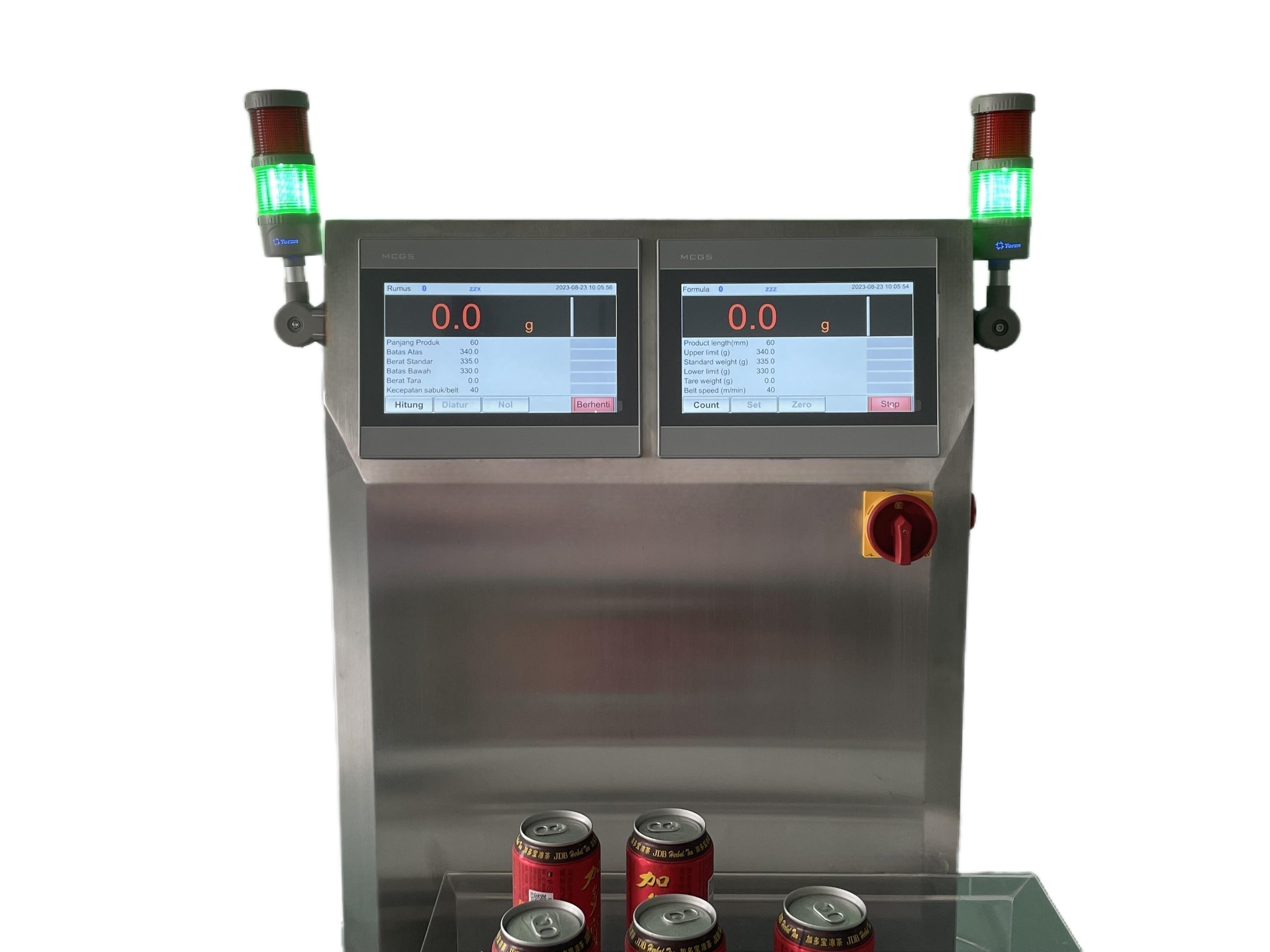
This is where an automatic checkweigher becomes valuable. By providing continuous inline weight inspection, a checkweigher helps manufacturers keep package weight closer to the target, reduce overfill, and improve cost control across the production line.
In this article, we explain how automatic checkweighers reduce product giveaway and why they are an important investment for modern packaging operations.
1. What Is Product Giveaway?
Product giveaway refers to the extra product placed into a package beyond the intended target weight. In many industries, operators intentionally overfill products to make sure no package falls below the acceptable limit.
This may seem like a safe approach, but when repeated across thousands of packages per day, even a small amount of overfill can become a major cost factor.
Typical causes of product giveaway include:
- Loose filling tolerances
- Inconsistent filling equipment performance
- Limited inline weight monitoring
- Overcompensation to avoid underweight risk
2. Why Product Giveaway Matters
Product giveaway directly affects profitability. When a packaging line adds more product than required, manufacturers are giving away saleable material without additional revenue.
This is especially important in industries such as food, pharmaceuticals, and consumer goods where production volume is high and raw material value is significant.
Reducing giveaway helps manufacturers:
- Lower raw material consumption
- Improve margin control
- Increase packaging consistency
- Support better process efficiency
3. How an Automatic Checkweigher Helps Control Overfill
An automatic checkweigher weighs products while they move through the production line. Instead of relying only on occasional manual sampling, the system performs continuous inline inspection and provides immediate feedback on package weight.
This allows manufacturers to understand whether products are consistently above the target and whether the filling process needs adjustment.
With better visibility into actual package weight, production teams can tighten average fill levels and reduce unnecessary overfill without increasing the risk of underweight products.
4. Continuous Inspection Improves Weight Stability
Manual spot checks only inspect a small portion of total output. As a result, weight drift may continue for long periods before operators notice the problem. By the time adjustments are made, a large amount of product may already have been given away.
An automatic checkweigher supports continuous inspection, which helps manufacturers:
- Detect weight drift earlier
- Monitor filling consistency in real time
- Identify unstable production conditions faster
- Respond to deviations before losses increase
This real-time visibility is one of the main reasons why automatic checkweighing is more effective than manual sampling for controlling giveaway.
5. Better Process Feedback for Filling Systems
Automatic checkweighers do more than reject products outside tolerance. They also help production teams understand how the upstream filling process is performing.
If a line shows a consistent overweight trend, operators can adjust the filler to bring package weight closer to the target. This improves control over the entire packaging process and reduces waste at the source.
Over time, this can create meaningful cost savings, especially on high-volume lines.
6. Savings Increase with Higher Production Volume
The financial benefit of reducing product giveaway becomes more obvious as throughput increases. A small reduction in average overfill may seem minor on one package, but across thousands or millions of units it can represent a significant amount of saved product.
For example, a packaging line running continuously each day can generate substantial annual savings simply by improving weight consistency and lowering excess fill.
This is why an automatic checkweigher is often seen not only as a quality control tool, but also as a cost-reduction tool.
7. High-Speed Packaging Lines Benefit Even More
On high-speed lines, weight variation can have a larger impact because more products are filled in less time. If the average weight is set too high, product giveaway accumulates very quickly.
In these applications, a high-speed checkweigher helps manufacturers maintain stable inspection performance while keeping up with the line speed.
This supports better control in fast-moving packaging environments where manual inspection would be too slow and inconsistent.
8. Better Weight Control Without Increasing Underweight Risk
Some manufacturers hesitate to reduce average fill because they worry that lower fill settings will increase the number of underweight packages. This concern is understandable, but continuous inline weighing makes tighter control more practical.
Because an automatic checkweigher verifies product weight on the line, it gives operators more confidence to optimize fill settings carefully. Instead of depending on a wide safety margin, manufacturers can maintain a narrower and more controlled operating range.
This improves efficiency while still protecting quality standards.
9. Supports Better Data and Production Decisions
Automatic checkweighers also support better data collection and process analysis. By monitoring actual product weight over time, manufacturers can identify patterns that contribute to giveaway, including filler instability, product variation, or mechanical issues.
This helps teams:
- Improve process control
- Track packaging performance trends
- Support internal quality reviews
- Make more informed production adjustments
Data-driven decision-making is important for long-term cost optimization.
10. Long-Term ROI of Reducing Giveaway
The return on investment from an automatic checkweigher often comes from several combined benefits. Reducing product giveaway is one of the most important, but not the only one.
Additional long-term advantages include:
- Improved packaging consistency
- Lower manual inspection burden
- Better process visibility
- More stable production performance
- Reduced risk of weight-related complaints
For many manufacturers, these benefits make checkweighing a valuable part of overall packaging optimization.
Conclusion
Product giveaway is a common but costly issue in packaging operations. By improving inline weight control, an automatic checkweigher helps manufacturers reduce overfill, improve process visibility, and lower production cost over time.
Instead of relying only on manual checks or wide filler safety margins, production teams can use continuous inspection to keep package weight closer to the target while maintaining stable quality control.
If you want to improve packaging efficiency and reduce product waste, explore our checkweigher models and specifications, learn more about our automatic checkweigher solutions, or contact us for application advice.
Frequently Asked Questions
What is product giveaway in packaging?
Product giveaway is the extra product filled into a package above the intended target weight, usually to reduce the risk of underweight products.
How does an automatic checkweigher reduce giveaway?
An automatic checkweigher provides continuous inline weight inspection, helping manufacturers monitor actual package weight and reduce unnecessary overfill.
Why is product giveaway expensive?
Because extra product is given away without additional revenue, product giveaway increases raw material cost and reduces profitability over time.
Is a checkweigher useful on high-speed packaging lines?
Yes. High-speed packaging lines benefit greatly from automatic checkweighing because weight variation can create large cumulative losses if overfill is not controlled.