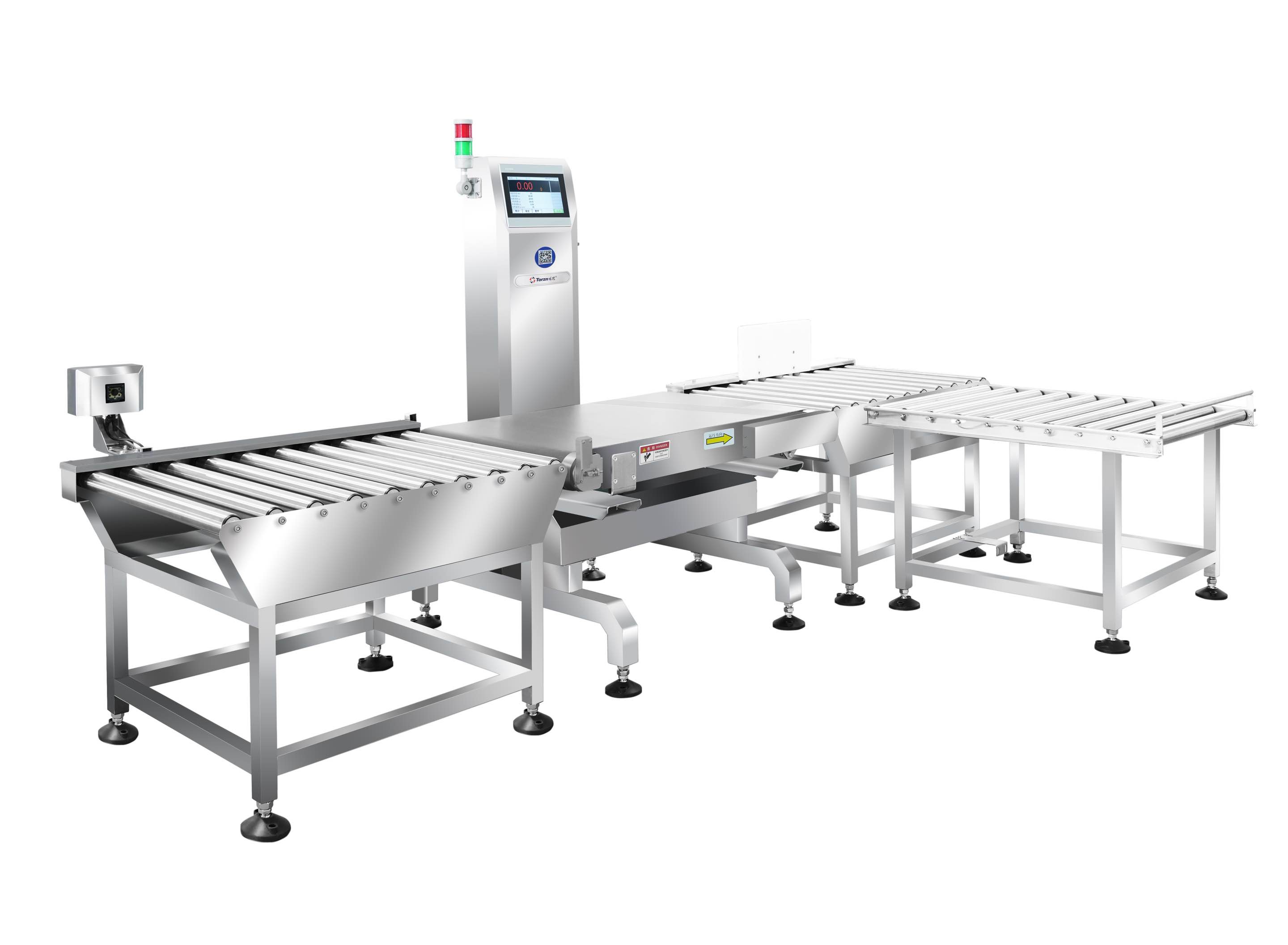
Why Food Manufacturers Need an Automatic Checkweigher
In the food industry, packaging accuracy is directly linked to product quality, compliance, customer trust, and production cost. Whether the product is packed in pouches, trays, cartons, cups, or bottles, every unit must meet the required weight range while moving efficiently through the line.
This is why more companies are using an automatic checkweigher as part of their food packaging process. Instead of relying only on manual sampling, food manufacturers can use continuous inline inspection to improve consistency, reduce waste, and strengthen process control.
In this article, we explain why an automatic checkweigher is becoming essential for modern food production lines.
1. Improve Packaging Weight Accuracy
Food manufacturers must maintain consistent product weight across every batch. Underweight packages can lead to customer complaints and compliance issues, while overweight packages increase product giveaway and reduce profit margins.
An automatic checkweigher helps verify that every packaged product stays within the preset tolerance range. This improves control over:
- Net weight consistency
- Packaging accuracy
- Production stability
- Quality assurance performance
For food businesses handling large daily output, even a small improvement in weight control can create significant long-term savings.
2. Reduce Product Giveaway
One of the most important reasons food manufacturers install a checkweigher is to reduce unnecessary product giveaway. In many packaging operations, lines are intentionally overfilled to avoid the risk of underweight products. While this may seem safe, it increases raw material cost over time.
By using an automatic checkweigher, manufacturers can keep product weight closer to the target value and reduce excessive overfilling. This leads to:
- Lower material loss
- Better cost control
- Improved profitability
- More stable packaging output
3. Support Continuous Inline Inspection
Food production lines often run at high speed and require continuous operation. Manual spot checks can only inspect a small sample of products and may miss real-time deviations happening on the line.
An automatic checkweigher performs inline inspection while products move through the conveyor system. This allows manufacturers to monitor weight continuously without slowing production.
For faster packaging operations, a high-speed checkweigher can provide stable inspection performance while keeping up with line throughput.
4. Improve Food Quality Control
Food manufacturers must manage multiple quality factors, including fill level, packaging consistency, product presentation, and production efficiency. Weight inspection plays an important role in this quality control process.
An automatic checkweigher helps quality teams:
- Detect underweight or overweight products
- Identify filling process instability
- Improve production consistency
- Strengthen overall packaging control
Because the machine checks products continuously, it provides faster feedback than manual inspection methods and helps operators respond to problems earlier.
5. Adapt to Different Food Packaging Types
Food products are packed in many forms, and each packaging type has different conveying and weighing characteristics. A checkweigher used in the food industry must be suitable for the product’s size, weight, and packaging material.
Common food packaging applications include:
- Pouches and sachets
- Trays and thermoformed packs
- Bottles and jars
- Cartons and boxed products
- Frozen and chilled packaged goods
This is why food manufacturers often need a system selected specifically for their packaging format and line speed.
6. Improve Process Visibility and Traceability
Modern food production requires better visibility into line performance. Manual inspection records are often limited and may not provide clear insight into changing process conditions.
Automatic checkweighers can support better production monitoring by helping manufacturers:
- Track weight trends over time
- Detect process drift earlier
- Support production reporting
- Improve internal quality documentation
This improves decision-making and helps quality and production teams manage the line more effectively.
7. Help Maintain Hygienic Production Standards
Food processing environments often require equipment that is easy to clean, durable, and suitable for washdown or humid conditions. A food-industry checkweigher should be designed with hygiene and long-term reliability in mind.
Depending on the application, manufacturers may need features such as:
- Stainless steel construction
- Easy-clean conveyor design
- Moisture-resistant components
- Stable performance in wet or cold environments
Choosing the right equipment design is especially important for fresh food, seafood, meat, frozen food, and other demanding production applications.
8. Support Automated Rejection of Non-Conforming Products
When a package is outside the acceptable weight range, it must be removed from the line quickly and accurately. Automatic checkweighers can work with reject systems that separate non-conforming products without interrupting normal production flow.
This helps food manufacturers:
- Reduce manual sorting
- Increase line efficiency
- Improve inspection reliability
- Keep accepted and rejected products clearly separated
9. Integrate with Broader Food Inspection Systems
Food manufacturers often need more than weight control alone. In many packaging lines, checkweighing is part of a broader inspection and automation process.
Depending on the application, the system may need to work with:
- Conveyors and filling machines
- Labeling and coding systems
- Reject mechanisms
- Other inspection devices
For lines that require both weight inspection and contamination screening, an automatic checkweigher with metal detector can offer a compact and efficient combined solution.
10. Deliver Better Long-Term Return on Investment
Although an automatic checkweigher requires an equipment investment, it often delivers strong long-term value for food manufacturers. By improving weight control and reducing waste, the system can help lower total operating cost over time.
Key long-term benefits include:
- Reduced product giveaway
- Lower labor dependence
- Higher inspection efficiency
- Better packaging consistency
- Improved production management
For growing food businesses, this makes automatic checkweighing not just a quality tool, but also a strategic production investment.
Conclusion
Food manufacturers need reliable weight control to support packaging accuracy, reduce giveaway, and maintain efficient quality assurance. An automatic checkweigher provides continuous inline inspection and helps production teams manage food packaging performance more effectively.
As food production lines become faster and more quality-focused, the value of automatic checkweighing becomes even more important. The right system can improve consistency, reduce waste, and support stable day-to-day operation.
If you are looking for a food packaging inspection solution, visit our food industry application page, explore our checkweigher models and specifications, or contact us for a suitable recommendation.
Frequently Asked Questions
Why do food manufacturers use automatic checkweighers?
Food manufacturers use automatic checkweighers to improve packaging weight accuracy, reduce product giveaway, and support continuous inline quality control.
Can a food checkweigher work on high-speed production lines?
Yes. Many systems are designed for medium- and high-speed food packaging lines and can maintain stable inspection performance during continuous production.
What types of food packages can a checkweigher inspect?
Automatic checkweighers can inspect pouches, trays, bottles, cartons, jars, and many other packaged food products, depending on system design.
Is an automatic checkweigher useful for reducing product giveaway?
Yes. By keeping package weight closer to the target value, an automatic checkweigher helps reduce unnecessary overfilling and improve cost control.