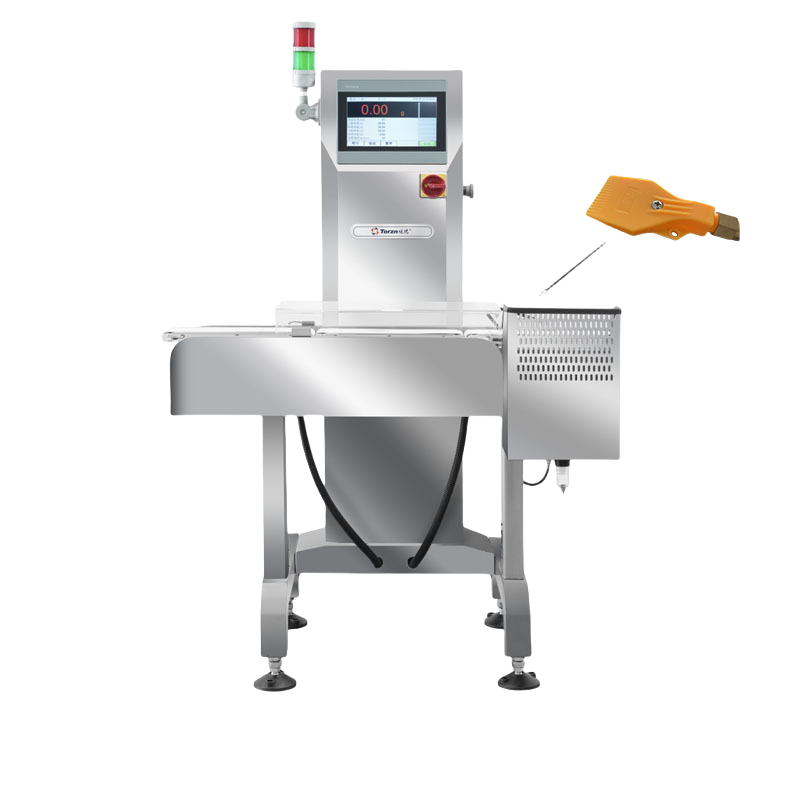
How Accurate Is an Automatic Checkweigher?
Accuracy is one of the most important questions manufacturers ask before choosing an automatic checkweigher. Whether the goal is reducing giveaway, improving package consistency, or supporting stricter quality control, the performance of the weighing system has a direct impact on production results.
However, checkweigher accuracy is not determined by one number alone. Actual weighing performance depends on product characteristics, conveyor stability, line speed, environment, and machine design. In this article, we explain how accurate an automatic checkweigher can be and what factors influence its real-world performance.
1. What Does Checkweigher Accuracy Mean?
In simple terms, checkweigher accuracy refers to how closely the measured weight matches the actual product weight during inline operation. Because the product is weighed dynamically while moving on the conveyor, the machine must deliver stable and repeatable results under production conditions.
Accuracy is often discussed together with:
- Repeatability
- Resolution
- Weight tolerance
- Dynamic weighing stability
For manufacturers, the most practical concern is whether the system can consistently identify products that fall within or outside the required weight range.
2. Accuracy Depends on the Application
There is no single accuracy value that applies to every automatic checkweigher. Required performance depends on the product type, package format, target weight range, and production objective.
For example, applications involving lightweight sachets or pharmaceutical packages may require tighter control than larger cartons or heavier industrial products. This is why system selection should always be based on the actual application rather than on a general specification alone.
3. Product Size and Weight Affect Accuracy
One of the biggest factors affecting checkweigher accuracy is the product itself. The machine must handle the real dimensions, weight, and movement characteristics of the package during inline inspection.
Important product factors include:
- Product weight range
- Package length and width
- Rigid or flexible packaging
- Center of gravity and stability
Smaller and lighter products usually require finer control, while unstable or flexible packages may be more sensitive to movement during weighing.
4. Conveyor Stability Matters
Dynamic weighing depends heavily on stable product transport. If the conveyor system allows excessive vibration, product bounce, or irregular spacing, weighing performance may become less consistent.
A well-designed checkweigher helps improve accuracy by using:
- Stable conveyor transition
- Controlled product spacing
- Optimized weighing section design
- Reduced vibration interference
This is one reason machine structure and conveyor engineering are so important in automatic checkweighing.
5. Line Speed Influences Dynamic Weighing Performance
The faster the production line, the more demanding the dynamic weighing process becomes. At higher throughput, the system has less time to stabilize and process each product’s weight.
That does not mean high-speed weighing cannot be accurate. It means the machine must be designed specifically for the required throughput. For faster lines, a high-speed checkweigher is often necessary to maintain stable inspection performance.
When evaluating accuracy, manufacturers should always consider the actual products-per-minute requirement.
6. Environmental Conditions Can Affect Results
Production environment also plays a role in accuracy. Factors such as airflow, floor vibration, humidity, temperature variation, and nearby equipment movement can affect weighing stability if the system is not designed properly.
Typical environmental influences include:
- Mechanical vibration from other machines
- Air movement from fans or ventilation
- Wet or humid conditions
- Unstable installation surfaces
In challenging production environments, anti-interference design becomes especially important.
7. Accuracy Is Not Just About the Scale Sensor
Some buyers focus only on the weighing sensor itself, but real checkweigher accuracy depends on the entire machine system. The sensor is important, but software control, conveyor design, frame rigidity, product handling, and signal processing all contribute to final performance.
This means a good automatic checkweigher is not just a weighing unit. It is a complete dynamic weighing system designed to deliver stable results in actual production conditions.
8. Better Accuracy Helps Reduce Giveaway
One of the biggest advantages of improved weighing accuracy is better control over product giveaway. If the system can measure product weight more consistently, manufacturers can keep average fill levels closer to the target without relying on excessive overfill.
This helps:
- Reduce raw material waste
- Improve package consistency
- Lower production cost over time
- Support better process optimization
In high-volume packaging operations, even small accuracy improvements can create meaningful savings.
9. Accuracy Also Supports Better Reject Decisions
An automatic checkweigher is used not only to measure weight, but also to decide whether a product should pass or be rejected. If weighing accuracy is weak, reject performance may become unreliable and lead to unnecessary product loss or missed defects.
Stable weighing performance helps ensure that reject decisions are based on accurate and repeatable measurement, which improves overall inspection reliability.
10. How to Evaluate Accuracy Before Buying
Before choosing a machine, manufacturers should evaluate more than just catalog claims. The best way to judge suitability is to review performance in relation to the real product and production line.
Important questions include:
- What is the actual product weight range?
- What tolerance must be controlled?
- How stable is the package on the conveyor?
- What is the required line speed?
- What environmental conditions may affect weighing?
If the application has unusual product handling or layout requirements, an OEM custom checkweigher solution may provide better long-term performance.
11. Why the Right Model Selection Matters
A checkweigher may be highly accurate in one application and less effective in another if the machine is not matched to the product and line conditions. This is why model selection is critical.
The right system should match:
- Product dimensions
- Package weight range
- Line speed
- Reject method
- Environment and cleaning requirement
To compare options, you can review our checkweigher models and specifications.
12. Accuracy Is Part of Overall Production Performance
Ultimately, checkweigher accuracy should be evaluated as part of total production performance. A good system should not only weigh accurately, but also fit smoothly into the line, support efficient throughput, and provide stable day-to-day operation.
For manufacturers, the real goal is not just a low error number. The goal is a system that supports reliable inline inspection, better process control, and stronger packaging consistency over time.
Conclusion
An automatic checkweigher can be highly accurate when it is properly matched to the product, production speed, and operating environment. Real-world performance depends on more than the weighing sensor alone. Product stability, conveyor design, line conditions, and machine structure all influence the final result.
For manufacturers that want reliable inline weighing, reduced giveaway, and better inspection control, selecting the right checkweigher is essential. Accuracy should always be considered in the context of the real application.
To find the right solution, explore our automatic checkweigher systems, compare our models and specifications, or contact us for technical advice.
Frequently Asked Questions
How accurate is an automatic checkweigher?
The accuracy depends on product weight, package stability, line speed, environment, and machine design. The right system can provide highly stable and repeatable inline weighing for the intended application.
What affects checkweigher accuracy the most?
Important factors include product characteristics, conveyor stability, production speed, vibration, airflow, and the overall machine design.
Does higher speed reduce checkweigher accuracy?
Higher speed makes dynamic weighing more demanding, but a well-designed high-speed checkweigher can still maintain stable inspection performance.
Can better accuracy reduce product giveaway?
Yes. Better weighing consistency helps manufacturers keep average fill levels closer to target and reduce unnecessary overfill.